
furniture · French Directoire Revival, Contemporary production in heritage atelier tradition
The Fieldstone Chair — Ebonised Sheesham & Handwoven Jute Armchair with Brass Nail-Head Trim
$294.00
Excludes 18% GST · added at checkout · Free shipping & authenticity
Details
Authentic
Insured
Curated
About this object
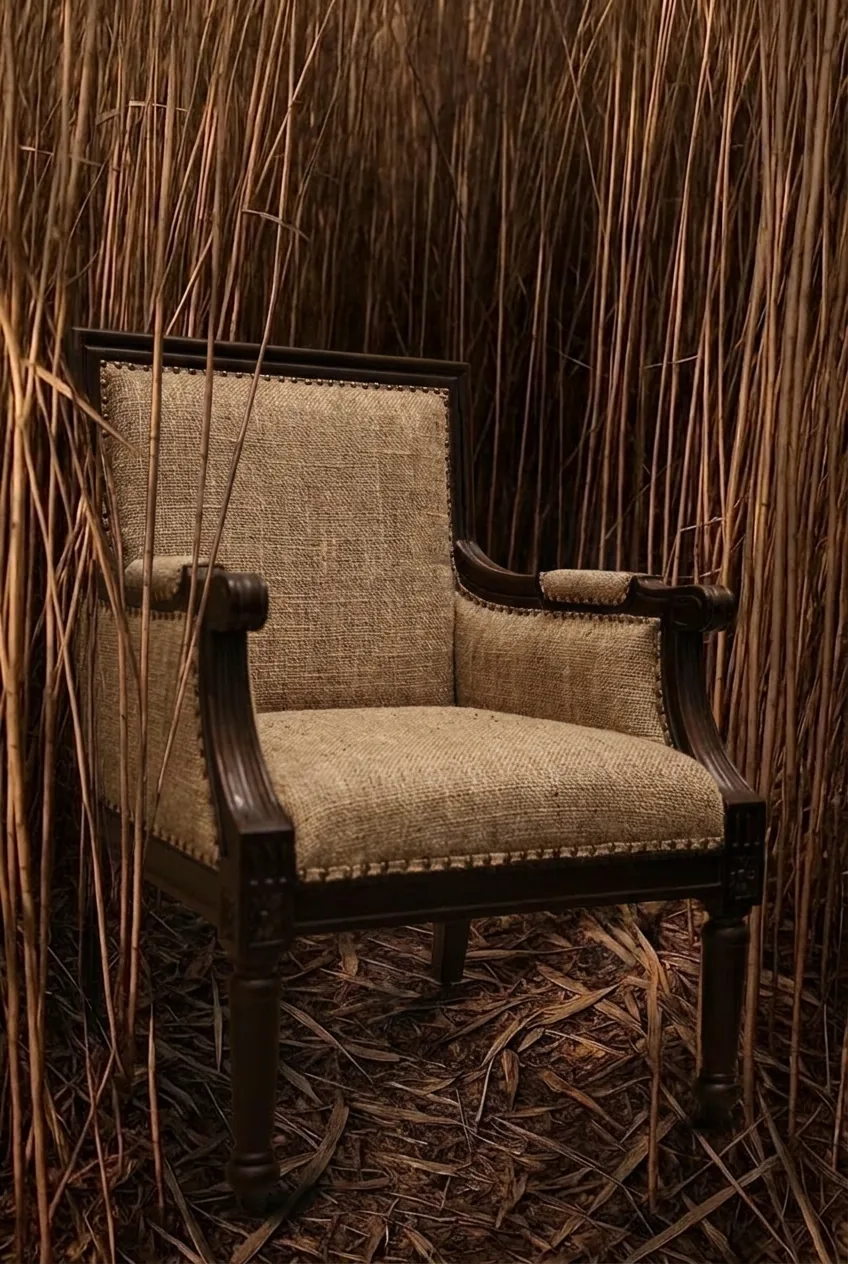
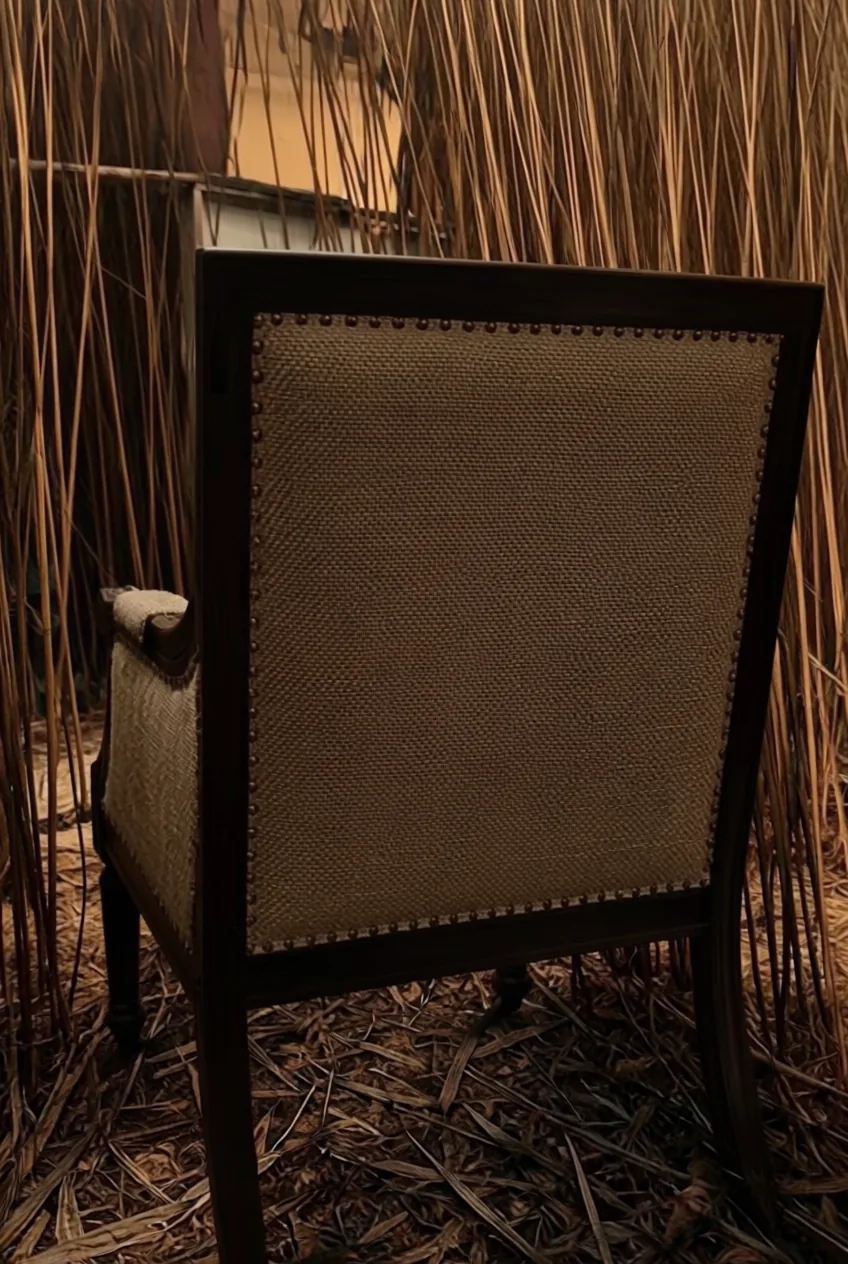
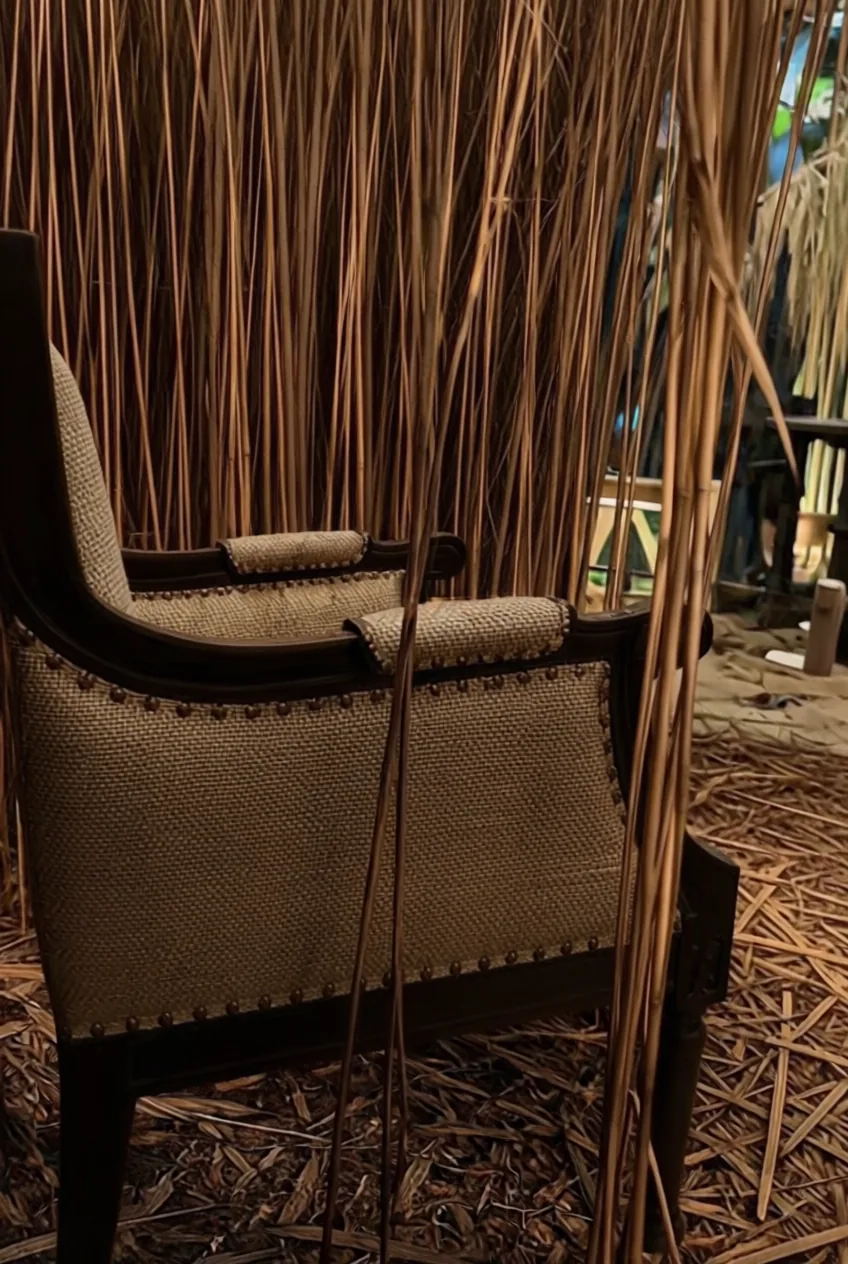
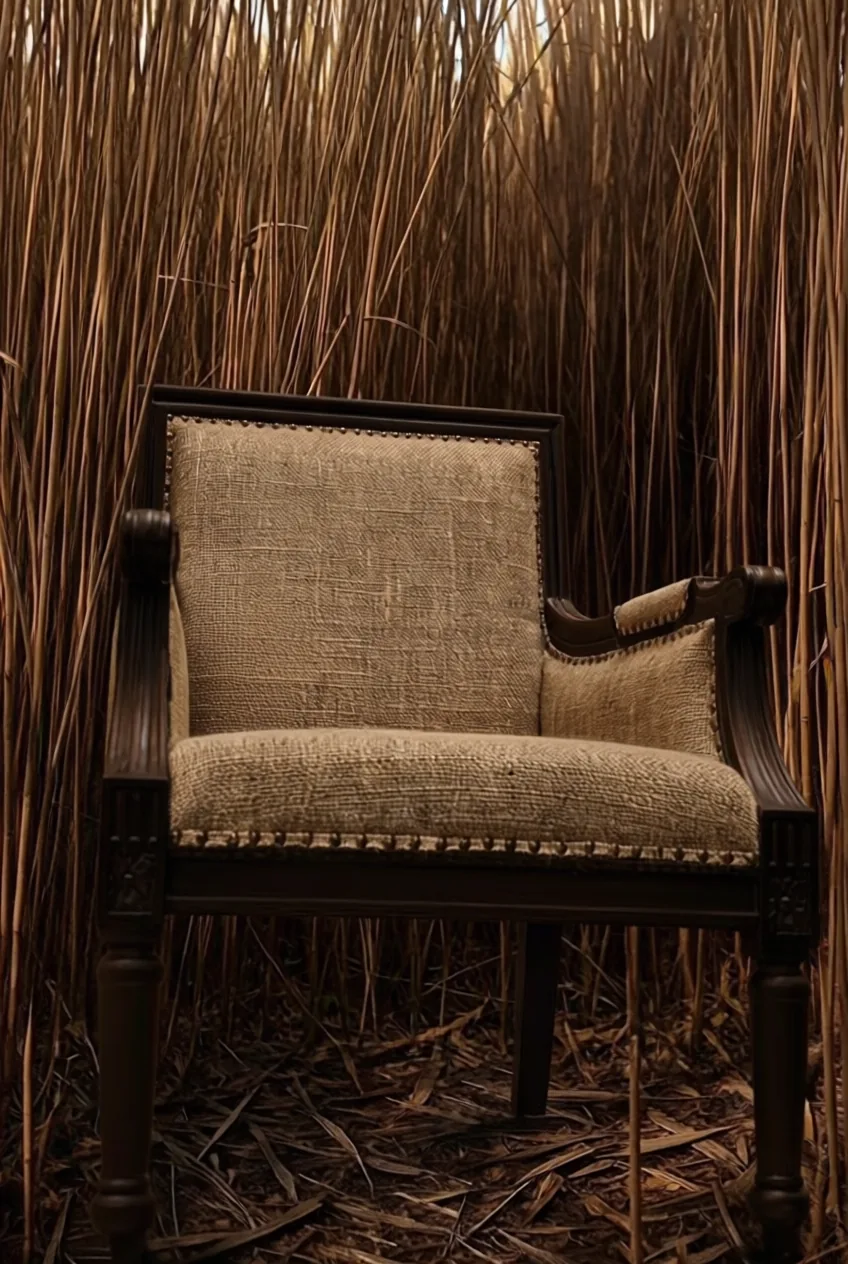
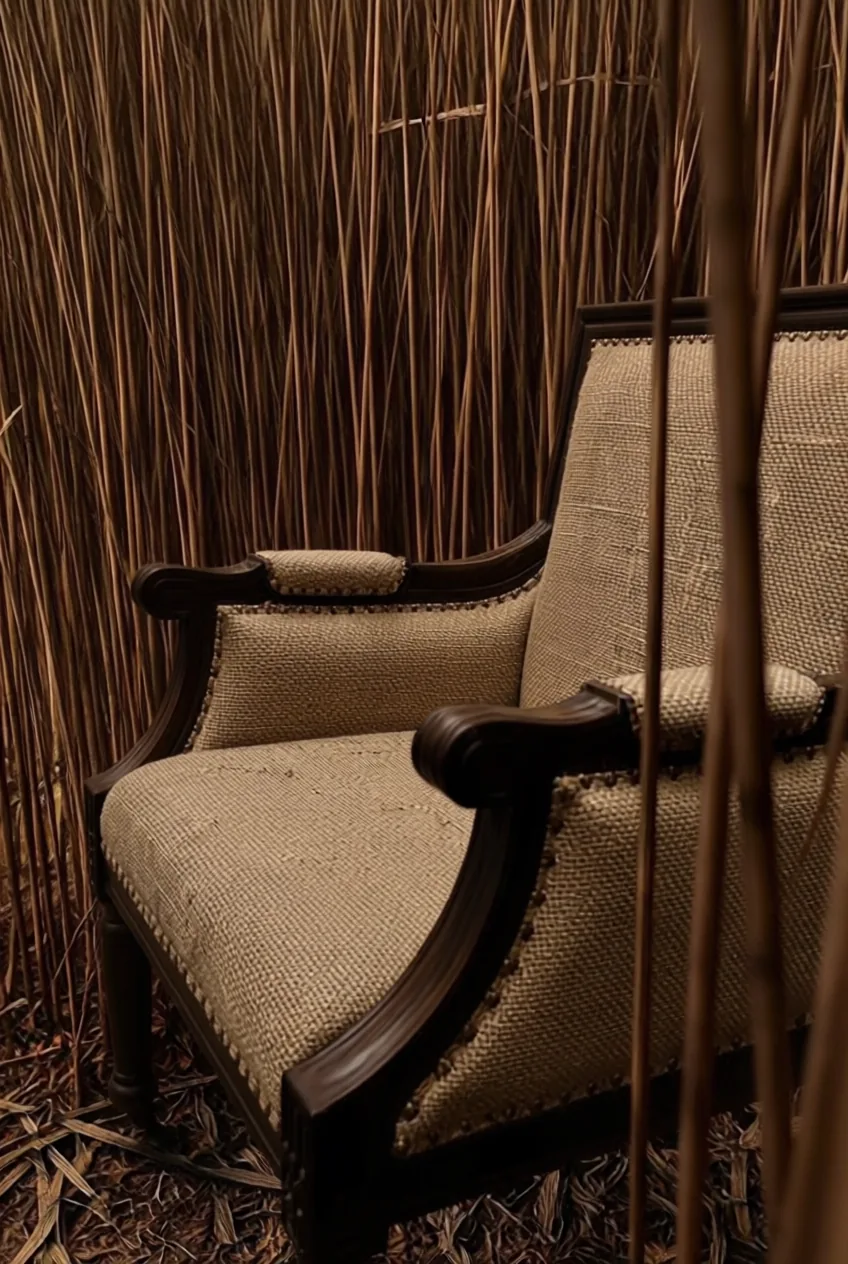
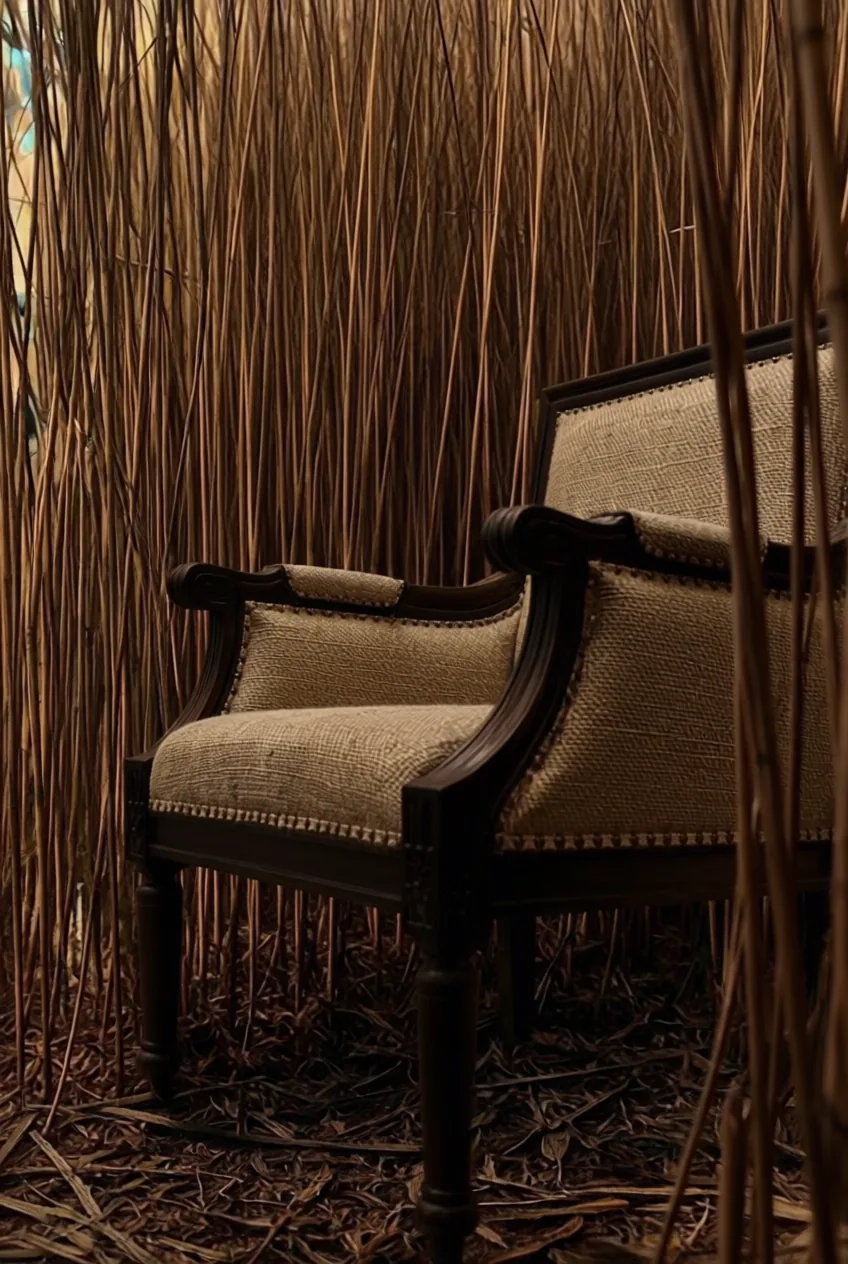
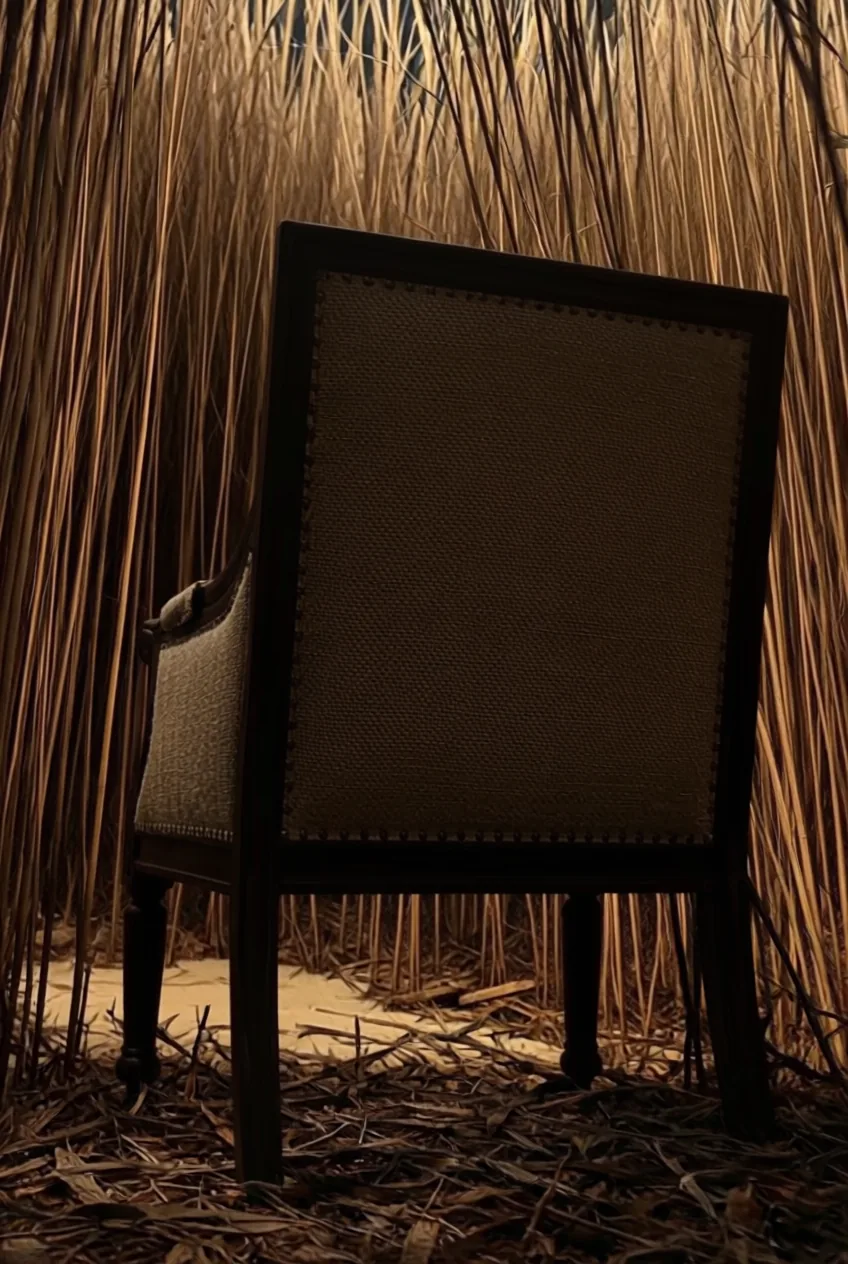
The Fieldstone Chair takes its name from the material it most closely resembles in its emotional register — solid, unhurried, entirely confident in its own weight. The frame is solid Sheesham finished in a deep ebonised dark walnut that absorbs light rather than reflecting it, so the carved detail of the scroll arm supports and reeded leg panels reads as shadow and relief. Against this darkness, the upholstery in natural handwoven jute-linen achieves a quality of contrast that no dyed fabric could replicate — the warm sand-and-straw tone of undyed natural fibre, woven in an open basket weave that catches light at every intersection. The nail-head trim in antique brass runs the full perimeter of every upholstered edge, set by hand at a pitch close enough to read as a continuous line from a distance, and distinct enough to reveal its craftsmanship up close. The form is unmistakably French Directoire — the period between the Revolution and the Empire when French furniture shed the elaborate ornament of the Ancien Régime and arrived at something more severe, more structural, more honest about the wood and the hand that shaped it. The square-section tapered legs, the flat arm rails, the back panel set into the frame rather than built above it — these are the decisions of a designer who understood that restraint is its own form of luxury. In Jodhpur, this vocabulary has been absorbed and built upon for generations; the craftsmen who produce this chair work within a tradition that has been in dialogue with French form since the nineteenth century, and the confidence of that dialogue is visible in every joint and proportion. This is a chair for rooms that have been composed rather than decorated — a study with raw walls and a single good lamp, a terrace with stone floors and afternoon light, a bedroom corner where one chair and one table is enough. It reads equally as a standalone accent piece and as a repeating element; a pair flanking a fireplace, four around a dining table, six on a hotel veranda. The natural jute upholstery will deepen in tone with use, the ebonised frame will develop micro-scratches that make it look more itself over time, and the brass nail-heads will acquire the patina that new brass never has. This is a chair that improves.
Pairs Well
You may also like
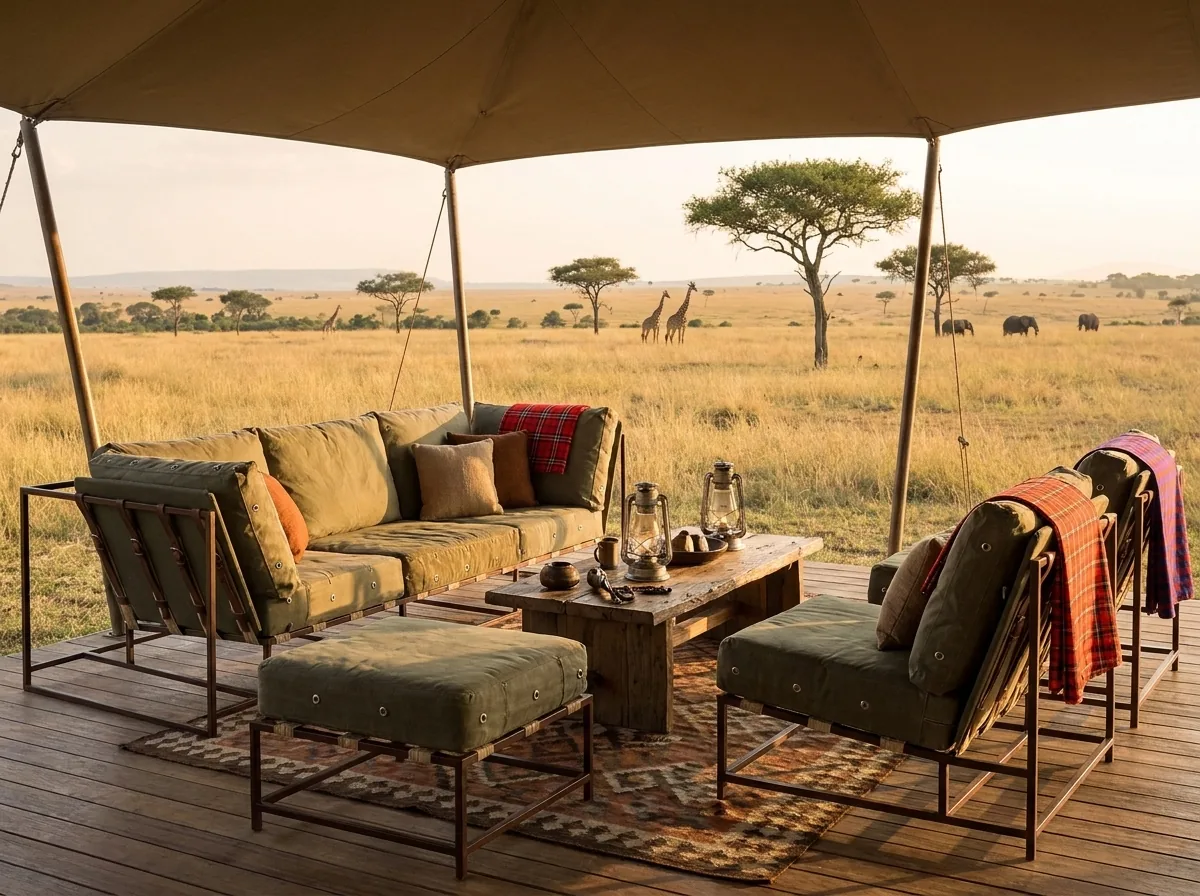
Safari Lounge Set in Military Canvas & Mild Steel — Three-Seat Sofa, Two Lounge Chairs & Ottoman
Contemporary (2026)
$1,449.00
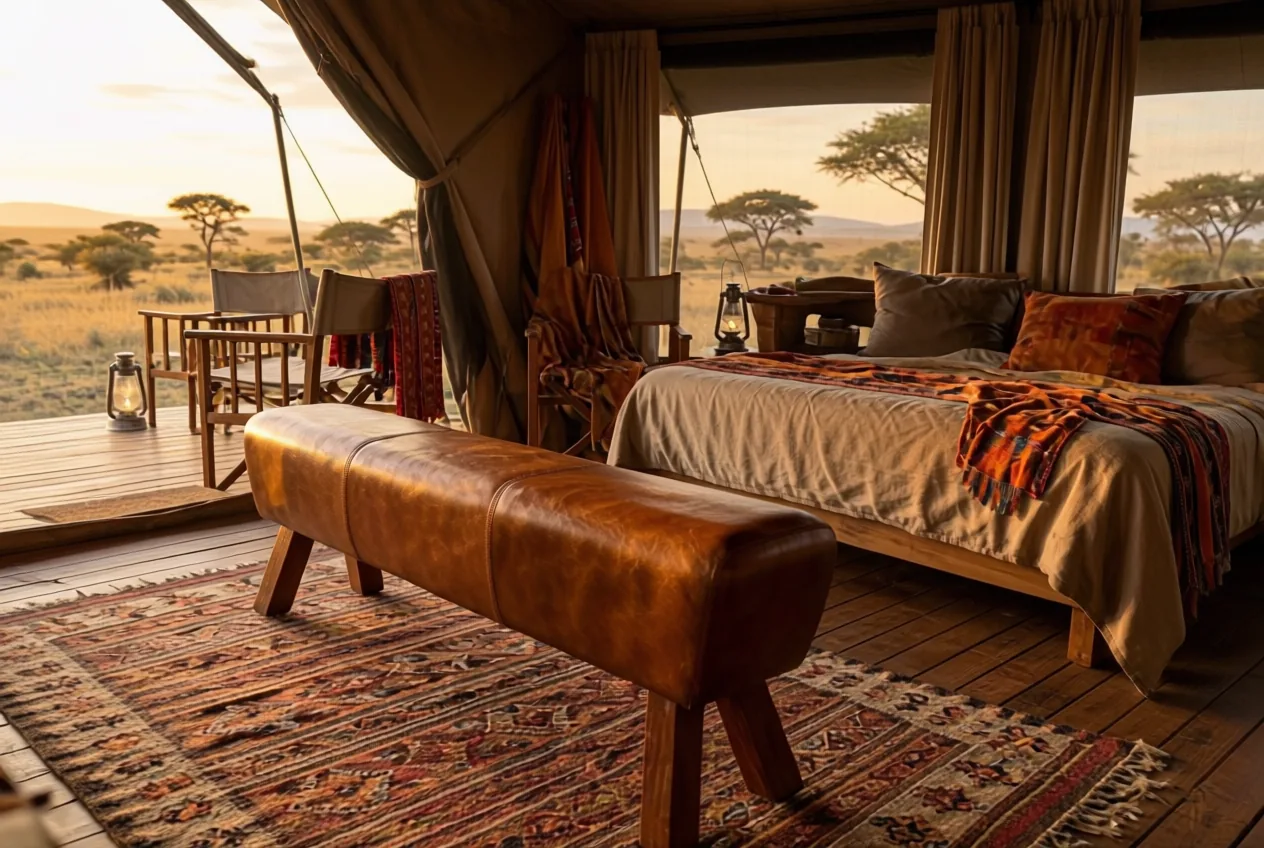
Pommel Bench in Full-Grain Leather on Splayed Hardwood Legs
Contemporary (2026)
$346.50
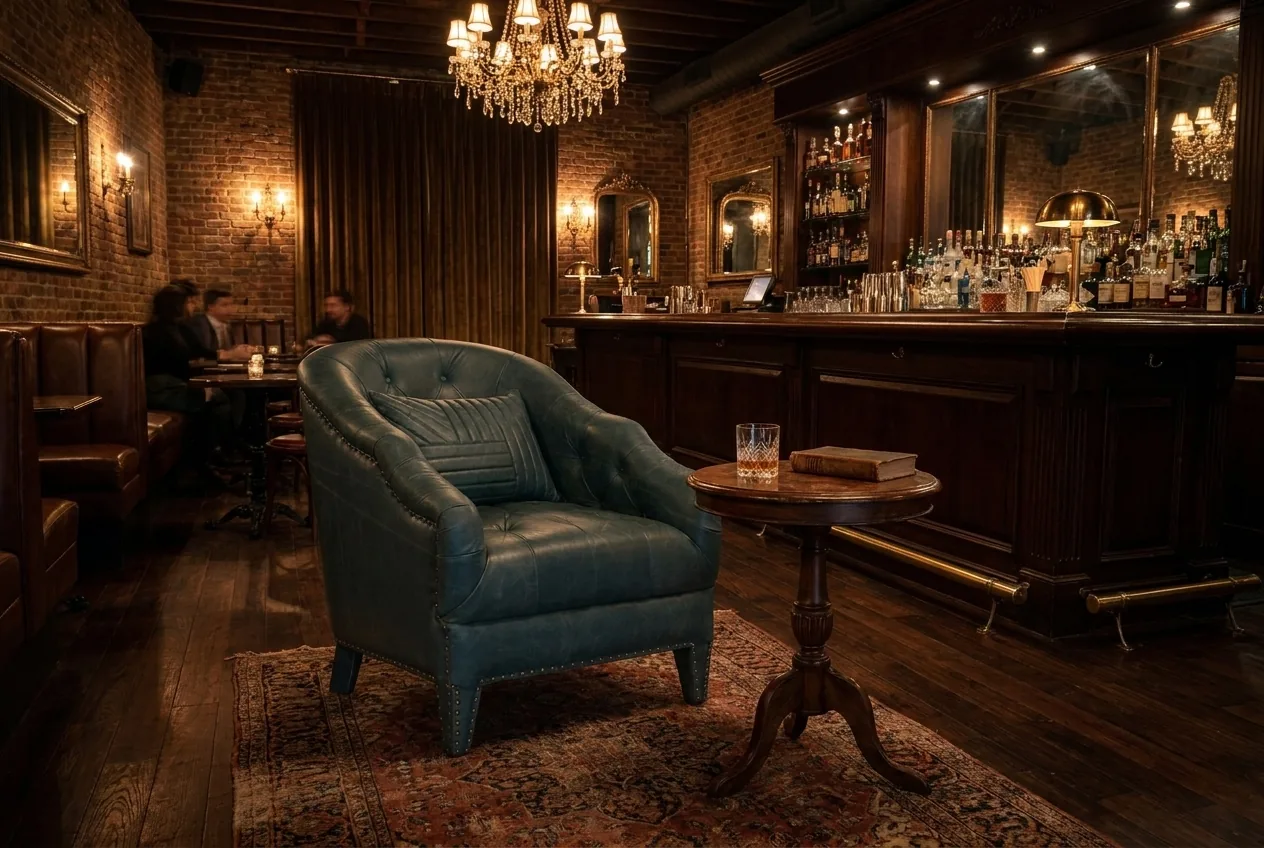
Buttoned Barrel Chair in Petrol-Blue Full-Grain Leather — Bronze Nailheads & Channel-Stitched Pillow
Contemporary (2026) — design lineage: Victorian tub chairs, speakeasy revival
$714.00
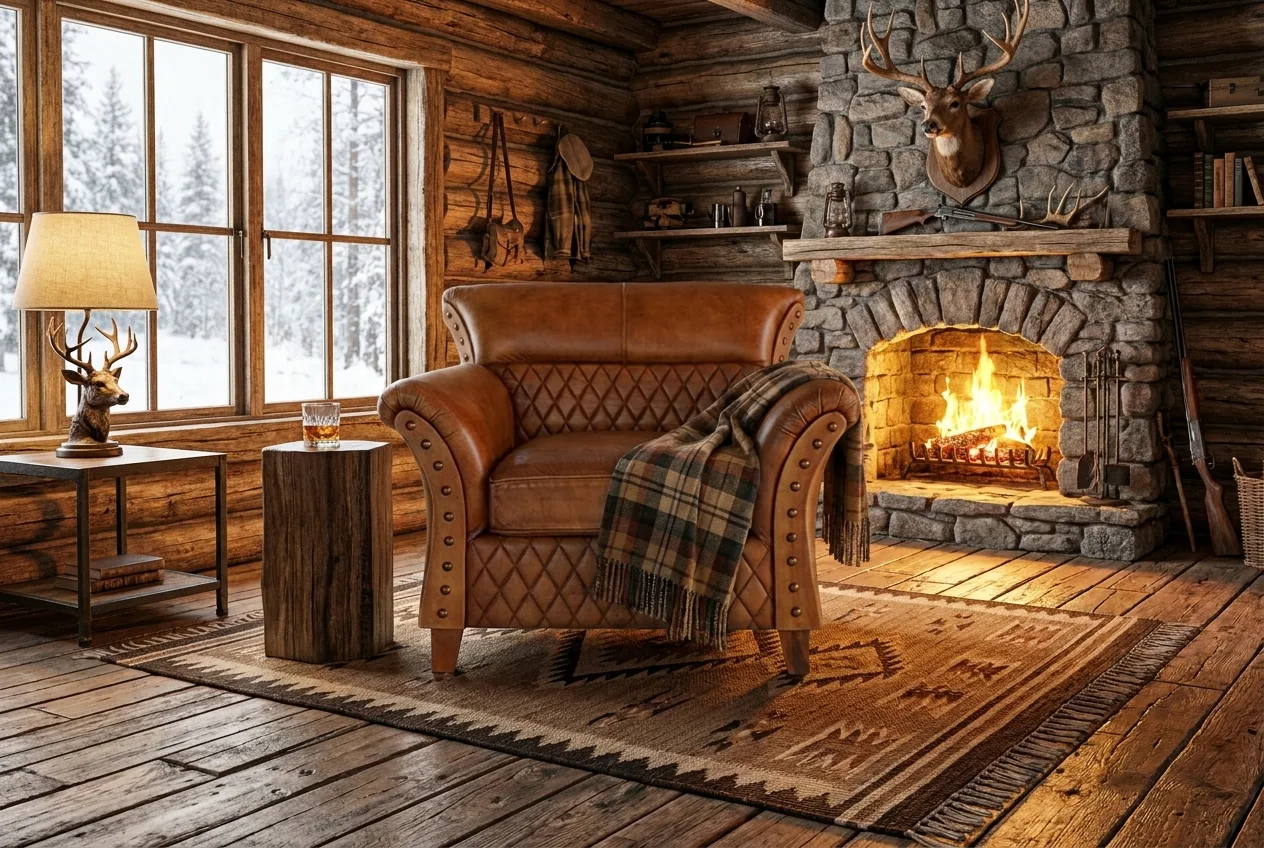
Diamond-Quilted Full-Grain Leather Armchair — Brass-Studded Club Chair
Contemporary (2026)
$714.00
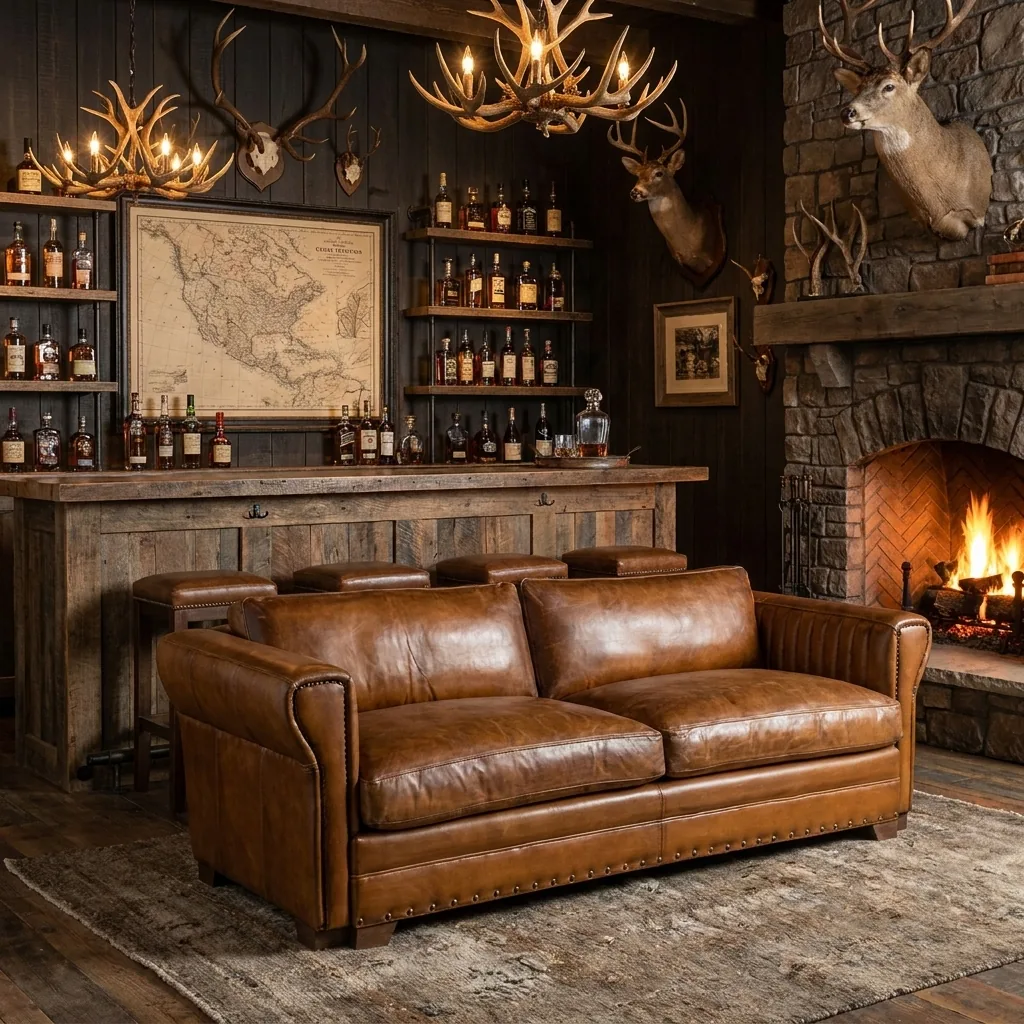
Three-Seat Sofa in Full-Grain Vintage Wax Leather — Channel-Fluted Arms & Bronze Nailheads
Contemporary (2026) — design lineage: English club sofas, 1920s–1930s
$2,047.50
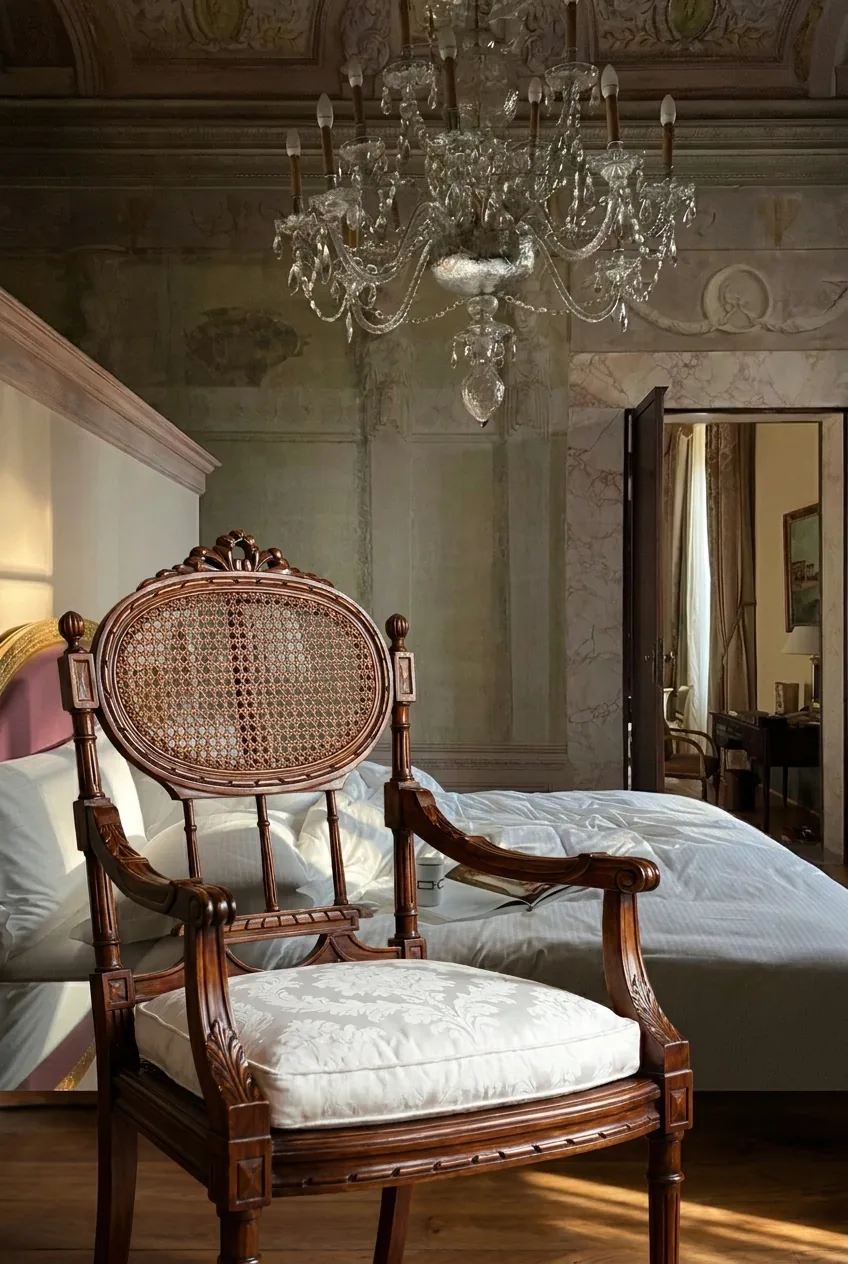
Caned Oval Medallion Armchair in Solid Teak — Ribbon Crest, Spindle Gallery & White Damask Cushion
Contemporary 2026 — Louis XVI design vocabulary (c. 1780s) with Edwardian influence
$409.50